
On August 26, Linear announced a $99 million employee tender offer at a $2.5 billion valuation—twice the valuation of its previous tender offer. More interestingly, the company said it did not need to raise additional capital: Linear is cash-flow positive and has more cash in the bank than it has raised.
That is an unusual position for a productivity-software company competing with Jira, Asana, Notion, and an expanding army of AI-native tools.
Linear is often described as “fast Jira” or “project management with better design.” Both descriptions miss the larger lesson. Linear’s advantage is taste—but not taste as decoration. Taste, in this case, is an operating system for deciding what a product should do, how it should feel, and what should never be allowed into it.
Taste begins with subtraction
Open Linear and the first impression is not that it has fewer capabilities. It is that fewer things are competing for your attention.
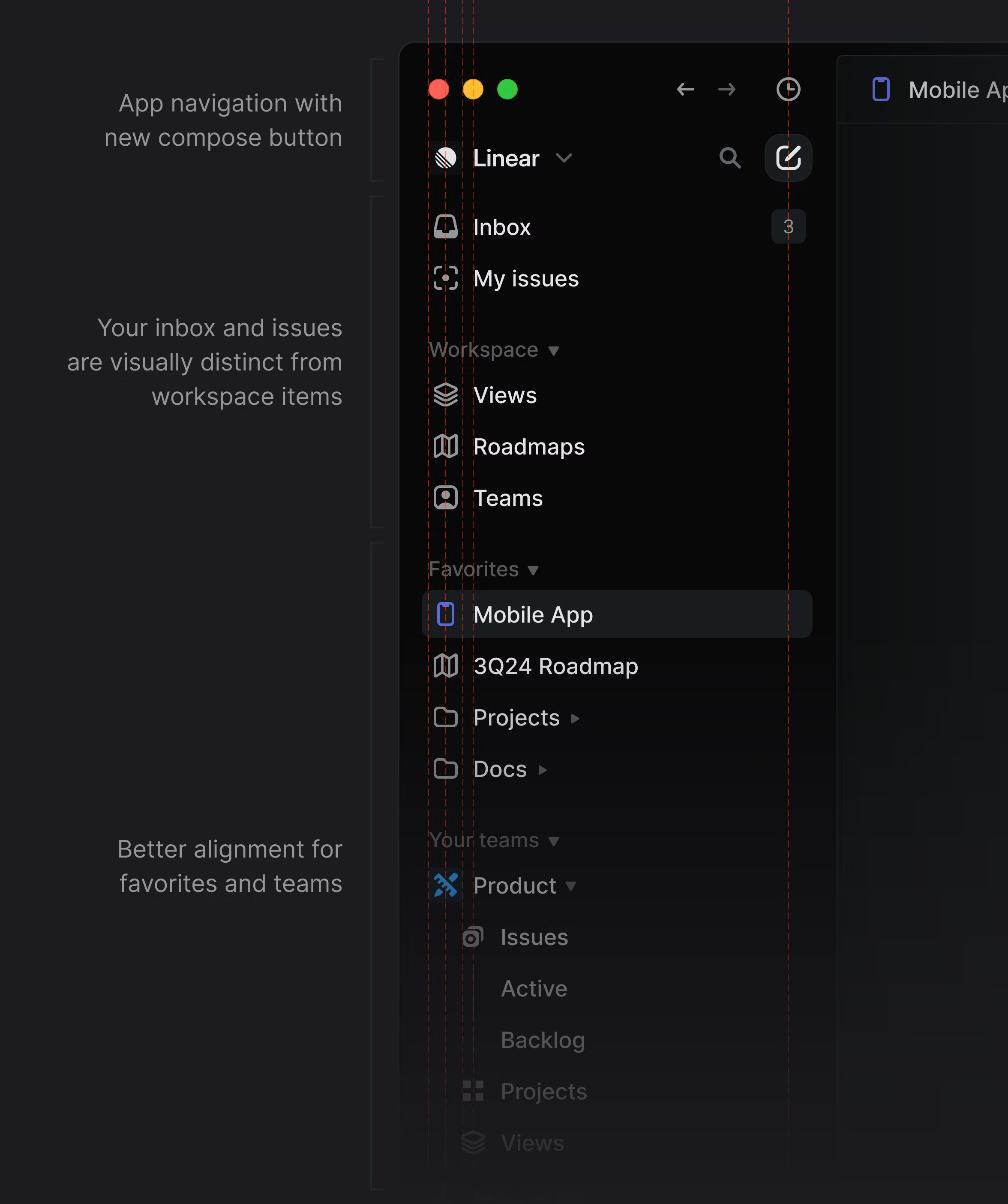
The restrained color palette, dense layouts, keyboard shortcuts, subtle motion, and carefully managed hierarchy all communicate the same idea: the work is more important than the software.
During its major UI redesign, Linear adjusted its sidebar, tabs, headers, and panels to reduce visual noise while increasing information density. The team explored hundreds of screens but deliberately left navigation restructuring out of scope when it threatened to turn the redesign into a riskier product overhaul.
That is taste as judgment. Not “Can we design this?” but “Is this the right problem to take on now?”
For product teams, subtraction can be evaluated through three questions:
What deserves the user’s attention?
What can the system infer or automate?
What complexity should the product absorb rather than expose?
The interface is only the visible layer
Linear feels fast because speed was treated as a product feature, not an engineering afterthought.
Its local-first architecture keeps a database on each client, allowing common actions to happen without waiting for a network request. In August, Linear described rebuilding its delta-sync read path to handle more than 20 terabytes of sync actions while keeping large workspaces responsive.
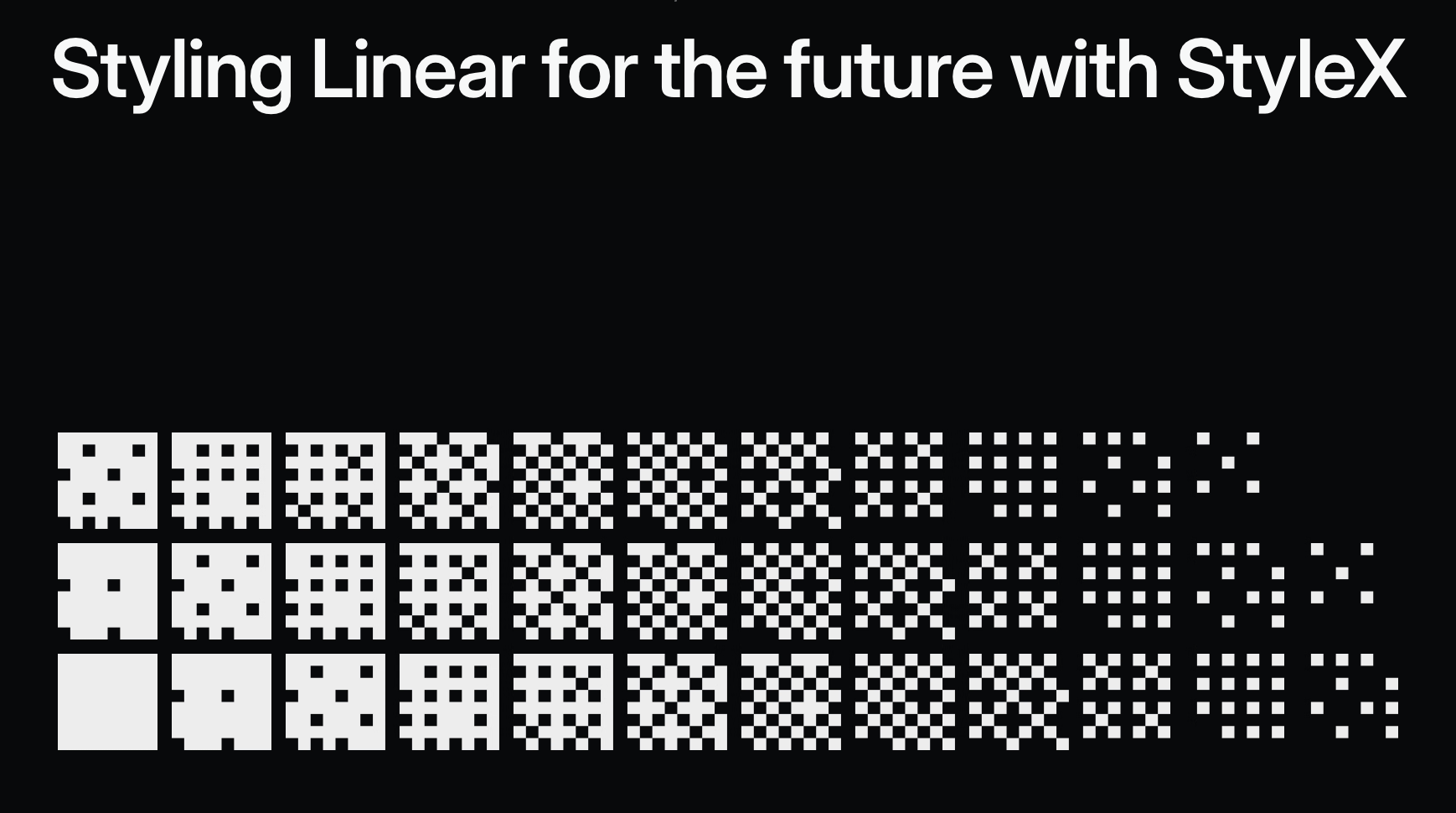
The company also completed a migration from styled-components to StyleX. Rather than relying on documentation and good intentions, the team added migration counters, visualization tools, bots, lint rules, and repository-level checks.
This reveals something important: consistently tasteful software requires infrastructure. A polished mockup is easy. Preserving coherence while hundreds of features and edge cases accumulate is the difficult part.
Taste must eventually become tokens, primitives, performance budgets, review standards, and automated guardrails.
AI is being absorbed into the workflow
The most consequential shift is Linear’s evolution from a system that records work into one that performs it.
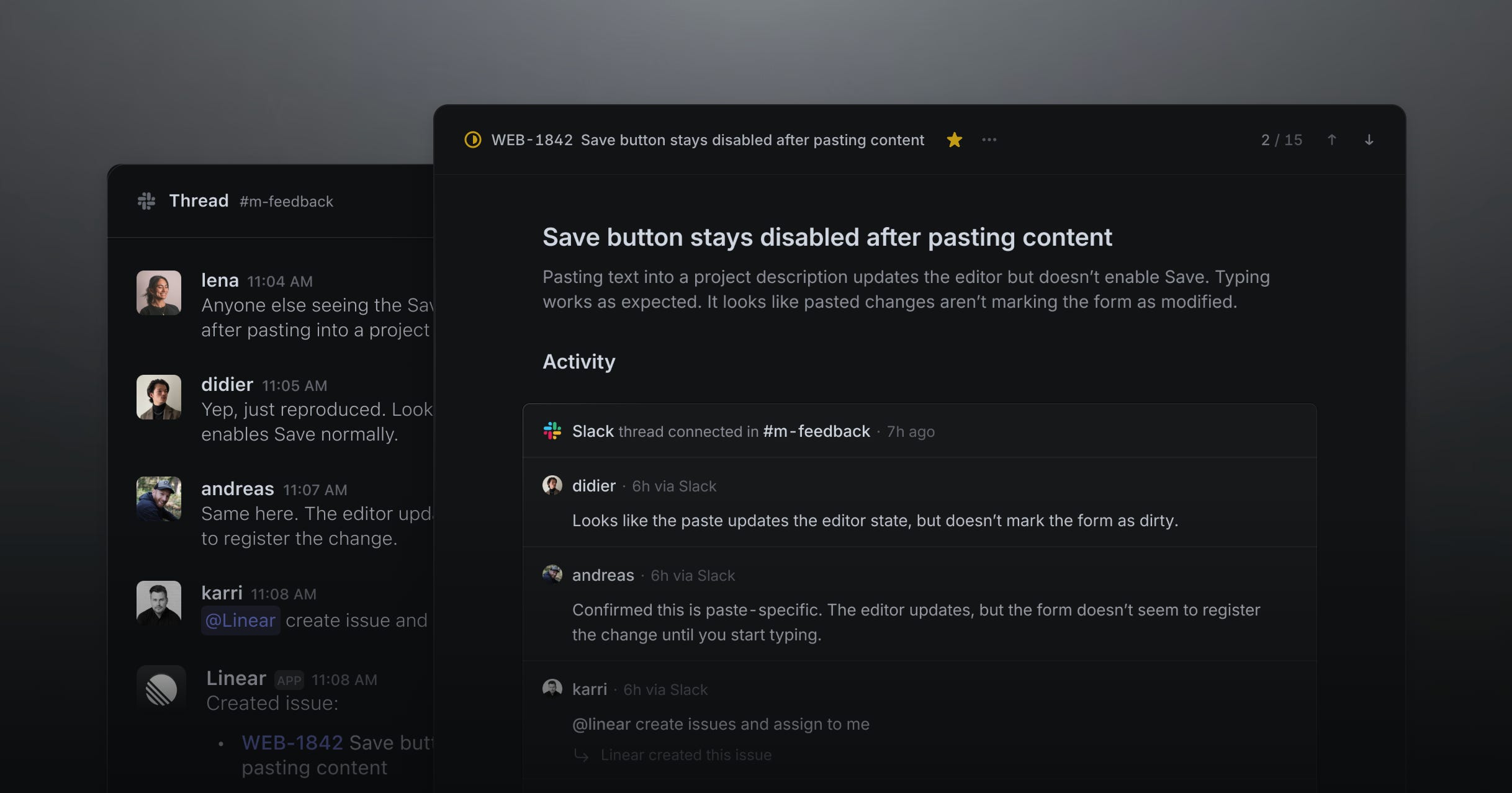
Recent coding-session updates let Linear Agent configure development environments, run applications, test changes in the browser, and return screenshots with its implementation. The agent is not placed in a separate “AI workspace.” It starts from the issue, uses the existing product context, and returns evidence where the team already works.
This is a more mature pattern for AI products: reduce the distance between intent, execution, and verification.
Linear is also careful about the boundaries. Its agent uses purpose-built tools, progressively loads relevant skills, and requests approval for risky actions. Capability is constrained by the product’s underlying model instead of being added as an open-ended chat layer.
The emerging principle is simple:
AI should inherit the product’s taste—not replace it.
A framework for product people
Linear’s approach can be reduced to four practical principles:
Opinion before options: Give users strong defaults instead of making every behavior configurable.
Speed is emotional design: Latency changes how confident and focused a product feels.
Craft needs enforcement: Turn design decisions into reusable systems and automated checks.
AI should complete loops: Connect understanding, action, and verification inside one workflow.
None of these principles requires Linear’s visual style. Copying its dark gradients or keyboard shortcuts would reproduce the surface, not the thinking.
The deeper lesson is that taste comes from a coherent point of view sustained across product strategy, interaction design, engineering, and company culture.
As AI makes software dramatically easier to produce, output itself becomes less valuable. The scarce skill will be deciding what deserves to exist—and having the discipline to make every layer of the product reinforce that decision.
The next generation of great products may not be the ones that can do the most. They may be the ones that know most clearly what they are trying to become.