

Muse, dots, Grok Bot and Claude Duet all promise an agent that works while you’re away. They disagree on almost everything else.
In ten weeks this fall, four AI companies launched the same idea. xAI shipped Grok Bot on August 11. Meta followed with Muse on September 8. OpenAI unveiled dots at DevDay on September 29. Anthropic opened a waitlist for Claude Duet on October 21.
Each gets its own computer in the cloud, signs into your apps, keeps working after you close the laptop, and messages you when it needs a yes. On a spec sheet they look nearly identical. Look closer and they’re four different answers to one question: what should an AI do when you’re not talking to it?
A chat app waits. An agent doesn’t.
It’s tempting to file these under “ChatGPT, but more.” That misses the shift.
The ChatGPT, Claude and Grok apps most of us use daily are pull products. You open a window, ask, read, leave. Close the tab and the work stops. Even with memory, the unit of value is a good answer.
A personal agent is a push product. You hand it a standing job, like “keep my invoices current,” and it acts on a schedule or when something changes. It has a persistent machine where files and logins live, it operates other software on your behalf, and it starts the conversation. The unit of value becomes an outcome, and the main interface becomes a stream of approval requests.
Notice that three of the four shipped as standalone apps. Muse lives apart from Meta AI, Duet apart from the Claude app, Grok Bot apart from Grok. Only dots sits inside ChatGPT. These companies are telling us an agent is a new product, not a feature toggle.
Same engine, four different bets
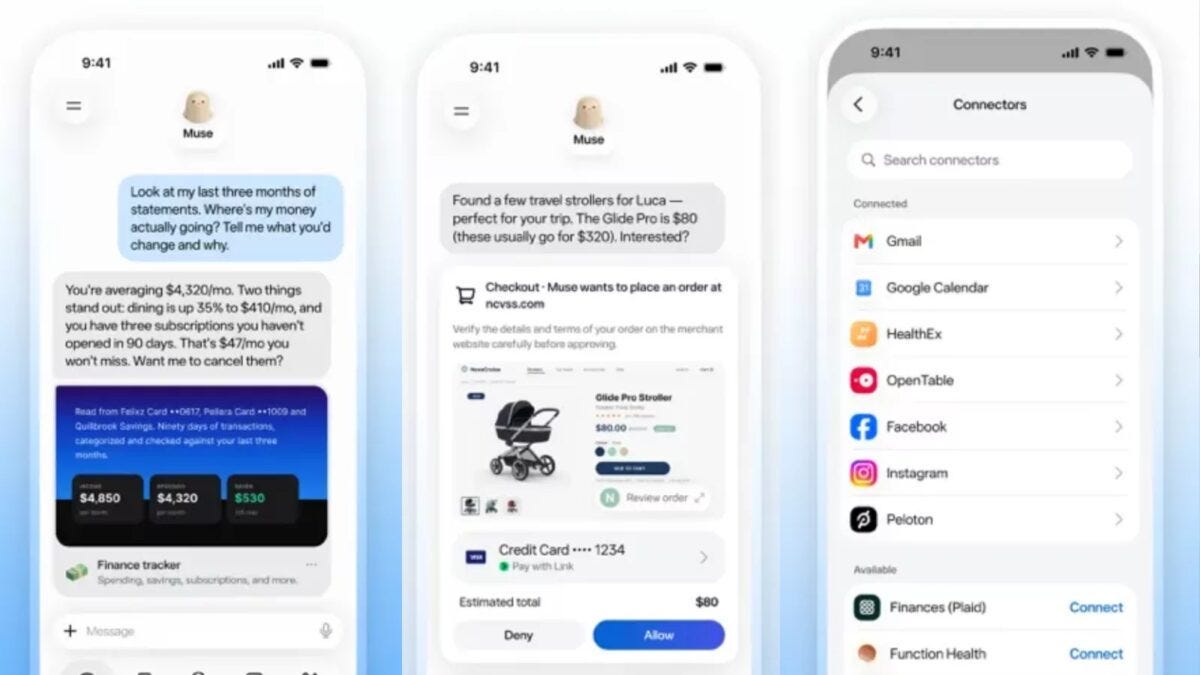
Muse is the consumer butler. It’s the only one with a free tier, plus paid plans at $20 and $100. You can message it on WhatsApp, name it, and choose its avatar and tone. Its memory lives in files you can open and edit, and shopping is its top use case. The tension: WIRED reported that Muse’s internal instructions describe building running profiles of the people in your life, for a company only 8% of US consumers trust with their passwords.
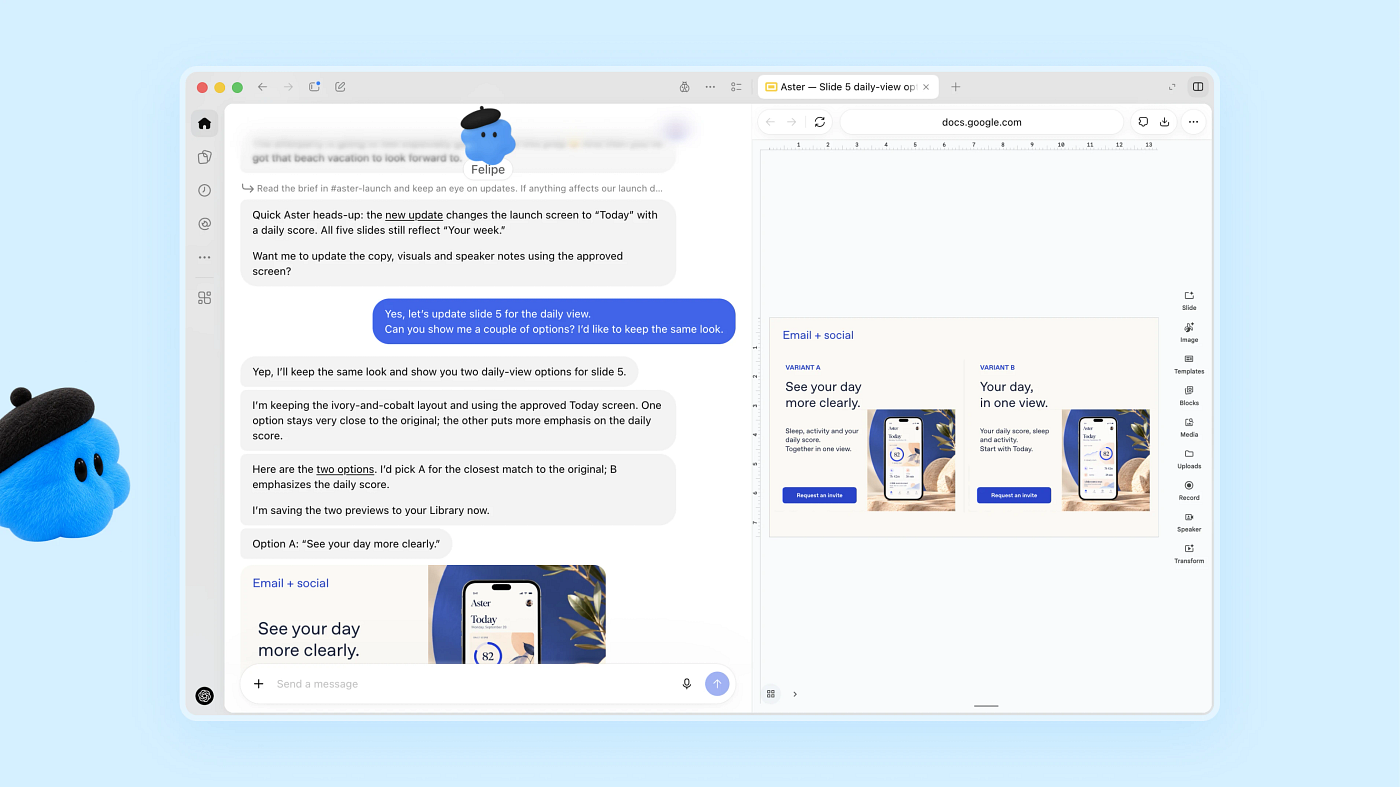
Dots is ChatGPT’s new layer. It starts at OpenAI’s $100 Pro tier, so Plus subscribers are left out. You reach your dot in ChatGPT, Slack or Teams, even by voice call, and chatting with it doesn’t count against usage limits. The trade-off is memory: you can’t view or delete individual memories, only reset the whole dot.
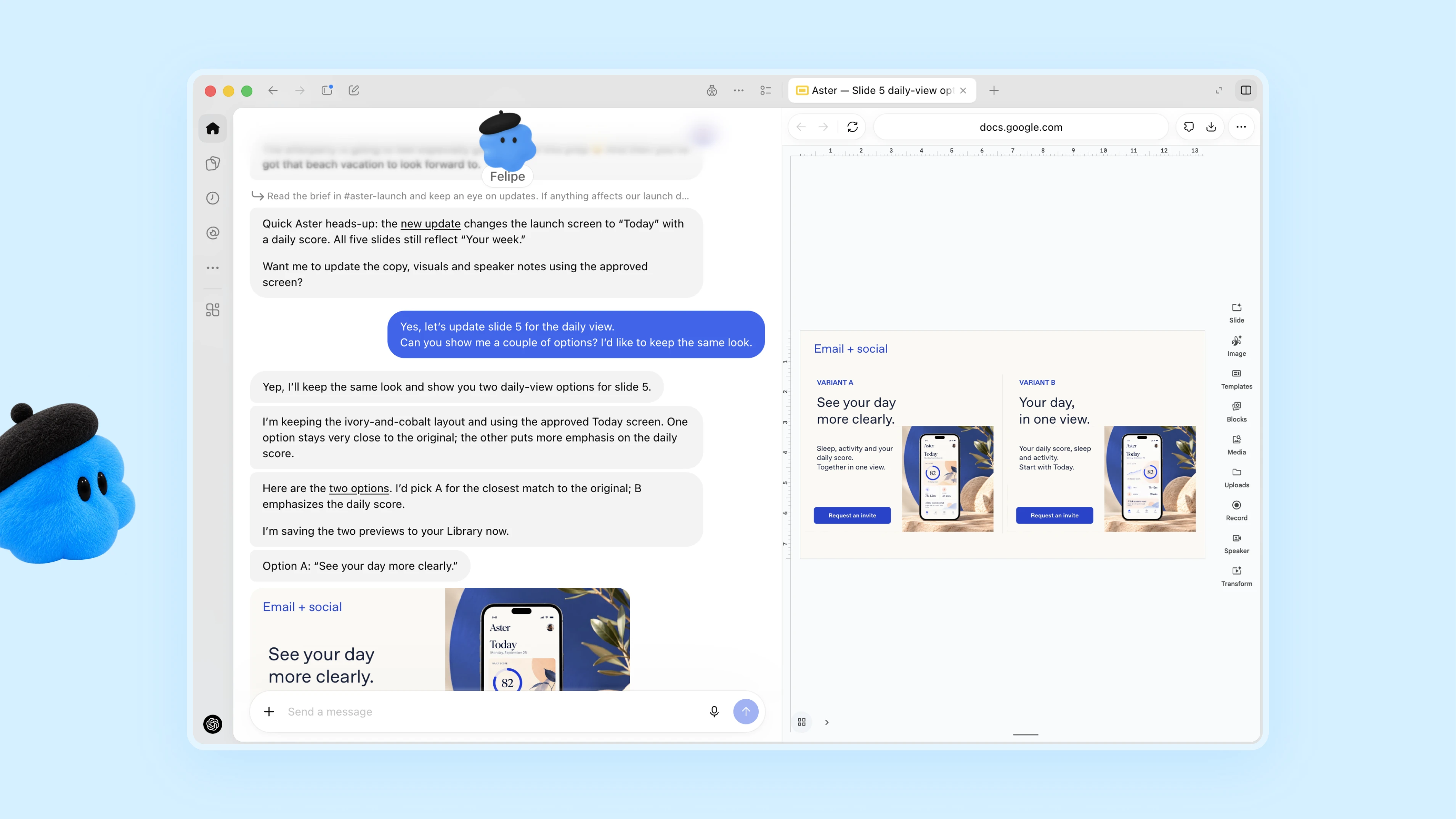
Grok Bot is a team, not an assistant. Instead of one agent, you spin up several (a researcher, a writer, a chief of staff) that hand work to each other in a group chat. Show a bot a workflow once and it saves it as a routine. It’s built for operators who want parallel labor, and it leaves most guardrails to you, since approvals are rules you write yourself.
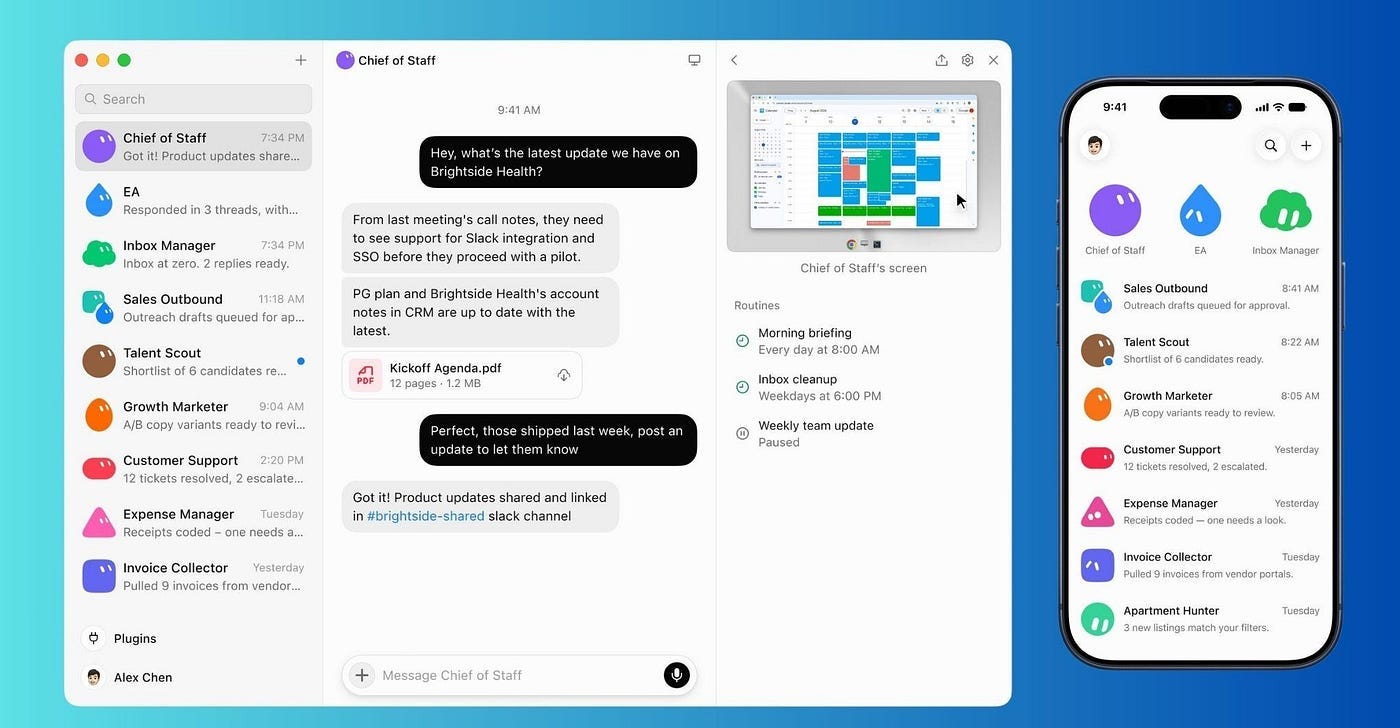

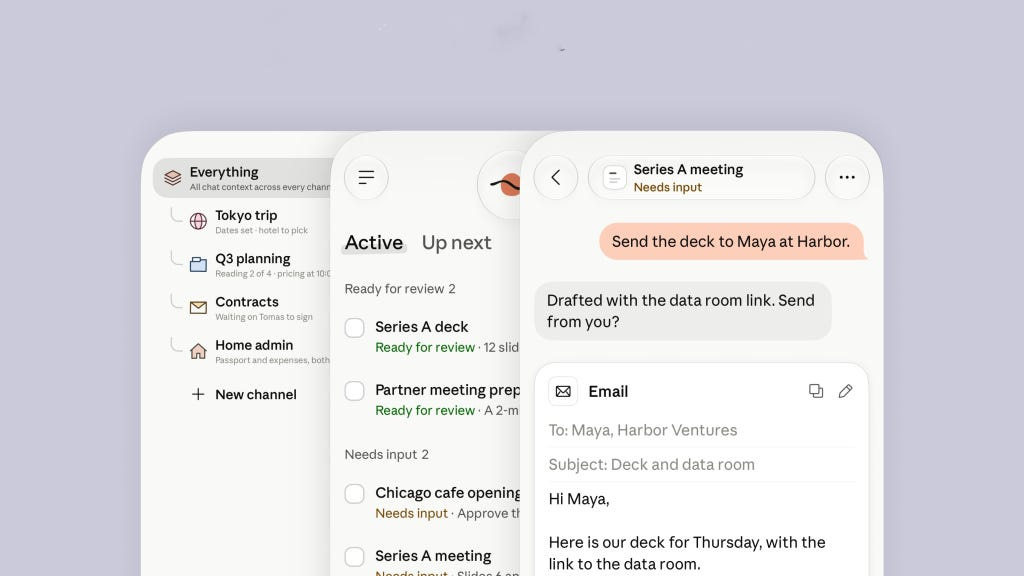
Duet is the cautious colleague. It targets professionals and small businesses and openly admits it’s weaker at personal errands. It sends a morning brief, then checks your apps every few hours instead of constantly, because every check draws on your Claude plan. It asks before sending, paying, signing or deleting, and stock trades and account transfers stay off even if you approve. It’s the most limited of the four on paper, and the most explicit about why.

What this means for product people
Three things stand out to me.
Attention is the new cost center. A chat app spends your time only when you choose. An agent spends it every time it pings you. Duet rations its check-ins; Muse lets you dial proactivity up or down. An interruption budget is now a design spec.
Memory is a trust surface. Editable files, a settings page, or a black box are three very different promises. If people can’t see what an agent believes about them, they’ll limit what they connect to it.
Design the “no” first. The approval card may be the most important screen in all four products. Decide which actions never happen without a human before you design anything else.
The open question
Muse made agents feel personal and climbed to #1 on the App Store. Duet bets people want an agent that does less, more carefully. Grok Bot bets on many hands; dots bets on one that lives where you already work.
Which one would you actually hand your inbox to?
References
xAI, “Grok Bot” product page: https://x.ai/bot
xAI, “Grok Bot on more plans” (Aug 26, 2026): https://x.ai/news/grok-bot-more-plans
eesel AI, “Grok Bot explained”: https://www.eesel.ai/blog/grok-bot
TechCrunch, “Meta debuts its Muse AI agent. Will consumers trust it?” (Sep 8, 2026): https://techcrunch.com/2026/09/08/meta-debuts-its-muse-ai-agent-will-consumers-trust-it/
TestingCatalog, “Meta introduces Muse as a proactive personal agent”: https://www.testingcatalog.com/meta-introduces-muse-as-a-proactive-personal-agent/
Let’s Data Science, summary of WIRED’s Muse memory report (Oct 3, 2026): https://letsdatascience.com/news/meta-muse-creates-profiles-of-users-contacts-15585c25
Forkast, Oppenheimer consumer trust survey: https://forkast.news/?p=130448
Mezha, “Meta Muse passes 10 million users”: https://mezha.ua/en/news/meta-muse-10-mln-users-316412/
SiliconANGLE, “OpenAI launches Dots” (Sep 29, 2026): https://siliconangle.com/2026/09/29/openai-launches-dots-always-on-ai-agents-in-chatgpt-with-their-own-cloud-computers/
eesel AI, “OpenAI Dots pricing, plan by plan”: https://www.eesel.ai/blog/openai-dots-pricing
dsebastien, “OpenAI Dots: always-on agents with a memory you can’t inspect”: https://www.dsebastien.net/2026-10-03-openai-dots-always-on-agents-with-a-memory-you-cant-inspect/
VKTR, “Claude Duet: Anthropic previews an AI agent that messages you first”: https://www.vktr.com/ai-platforms/claude-duet-anthropic-previews-an-ai-agent-that-messages-you-first/
iThome, Claude Duet safety and approvals: https://www.ithome.com.tw/news/179897
AIMultiple, “Always-On Agents: Claude Duet vs Dots vs Grok Bot”: https://aimultiple.com/always-on-agents