

The Job Description That Broke the Internet
A few months ago, a design engineer job listing at Vercel quietly started circulating on tech Twitter. It asked for someone “as comfortable in Figma as they are in the codebase” — a person who could lead design initiatives in the morning and ship production-ready Next.js components in the afternoon. The pay range was north of $200,000.
The replies were predictable. “This is two jobs.” “They want a unicorn.” “This doesn’t exist.”
Except it does. And the companies finding these people — Vercel, Stripe, Linear, Cursor — are producing some of the most admired interfaces in tech. The debate isn’t really about whether the role exists. It’s about whether the profession is ready to accept that the line between design and engineering was always, at least partially, artificial.
So What Is a Design Engineer, Actually?
Here’s where it gets interesting, because the title is genuinely contested.
If you search “design engineer” in the traditional sense, you’ll find mechanical engineers who build physical products — people doing CAD modeling, tolerance analysis, and Design for Manufacturing reviews. This version of the role has existed for decades and it’s a legitimate, thriving path.
But in software, something newer is happening. The design engineer there is what you might call a “form-and-function specialist” — someone who sits precisely at the boundary between design intent and engineering execution. They don’t just hand off specs; they implement them. They don’t just write code; they make it beautiful.
Vercel describes their design engineering team as being “responsible for the highest level of polish, creativity, and interaction” on the platform. They work on “design-led projects” — work that often gets deprioritized in a traditional engineering backlog because it lives in the ambiguous space between a designer’s vision and a developer’s implementation list. The design engineer resolves that ambiguity by doing both.
Call them what you want — UX engineer, design technologist, creative developer. The job title is less important than the mindset: build things that work, and make them feel right.
Why This Moment, Why Now?
The emergence of this role isn’t an accident. A few forces collided to make it almost inevitable.
First, user expectations have fundamentally changed. People compare your app to Linear and Notion, not just your direct competitors. The bar for “good enough” interface work has been raised by a handful of extraordinarily well-crafted products, and the gap between “functional” and “delightful” is now a business risk. Companies that can close that gap faster will win.
Second, the traditional design handoff is broken and everyone knows it. Designers work in Figma. Engineers work in the codebase. In between is a process that loses fidelity at every step — animations that don’t translate, spacing that shifts, interactions that get cut for time. The design engineer collapses the handoff because they do both sides of it themselves.
Third, AI is reconfiguring what engineers actually spend their time on. Generative tools are absorbing the more mechanical tasks — boilerplate code, initial structure, repetitive components. What’s left — judgment about what should exist, how it should feel, where interaction creates delight — is exactly where design thinking has always mattered most. Engineers who can think like designers are suddenly more valuable, not less.
The Two Flavors of the Role
Before you go rewriting your LinkedIn headline, it’s worth understanding that “design engineer” means different things depending on where you work.
In software companies, the design engineer is a frontend specialist with strong visual sensibility. They know component architecture, animation, accessibility, and performance. They can prototype in code faster than most designers can in Figma, and they care deeply about whether a button press feels right. Vercel’s team works across branding, marketing surfaces, product development, and internal design systems — wherever polish matters most.
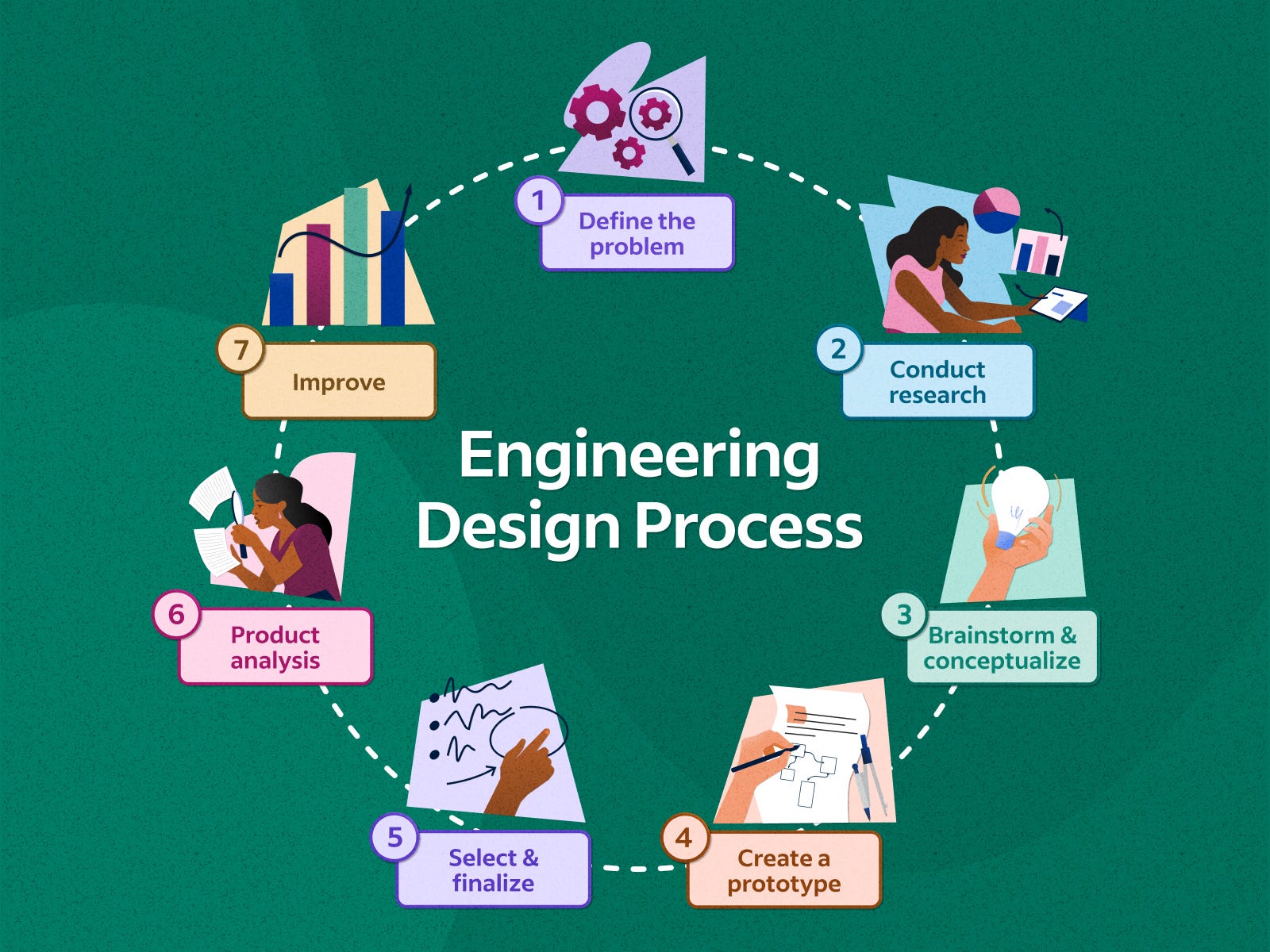
In hardware and manufacturing companies, the design engineer does something differently demanding. They translate concepts into manufacturable solutions: 3D modeling, material selection, tolerance analysis, simulation. They’re the bridge between an industrial designer’s sketch and a factory’s floor. AI is changing this side of the role too — generative design tools now help engineers explore far more design alternatives much faster, and simulation-led workflows are becoming standard.
Both versions share something important: a refusal to stay in one lane. The design engineer in software and hardware both derive their value from operating at an intersection most professionals avoid.
How to Actually Become One
Here’s the practical part, which I’ll be direct about: there’s no single path, and that’s both the challenge and the opportunity.
If you’re a designer who wants to code: Start with the smallest possible production thing. Not a tutorial. Not a side project nobody uses. Find a real constraint — a component you want to exist on your current portfolio site, a bug in an open-source project’s interface, a feature your team’s app genuinely needs — and build it. Ship it. The discipline of production is different from the discipline of prototype, and your goal is to learn the former. TypeScript, React, and an understanding of the browser rendering model are your first curriculum.
If you’re an engineer who wants to design: The temptation is to take a UI course and call it done. Resist that. What you actually need is taste, and taste is developed through attention and imitation before it’s developed through theory. Study the interfaces you admire. Understand why they work — spacing, hierarchy, motion, feedback. Figma is learnable in a weekend; developing the judgment to make something feel right takes months of looking at good work closely.
For both paths: Build a portfolio that tells a story of process, not just outputs. Hiring managers for these roles want to understand how you think — how you moved from a constraint to a decision, how you traded off implementation cost against experience quality, how you failed and adjusted. Show the iteration, not just the finish line.
On the hardware side: The fundamentals still matter enormously. A strong grasp of CAD, simulation tools, and materials science remains the baseline. What differentiates candidates now is fluency with AI-assisted design workflows, and — crucially — the ability to validate and question what those tools generate. As AI takes on more routine design tasks, the skill of knowing when the AI is wrong is becoming a premium.
The Framework Worth Stealing
Whether you’re hiring for this role or growing into it, there’s one mental model I find consistently useful: the gap between design intent and implementation reality is a product risk, not just a process inefficiency.
Every time a designer hands off a spec and an engineer implements it slightly differently, that’s a compounding failure. Over a product’s lifecycle, those small deviations accumulate into something that feels off even when you can’t articulate why. The design engineer is the person whose job is to close that gap — not through better handoff documentation, but by collapsing the distance between the person who imagines the experience and the person who builds it.
If you can see yourself doing both — or learning to — there’s never been a better time to try.
The Open Question
Here’s what I keep coming back to: as AI tools get better at generating interfaces, components, and even entire product flows, will the design engineer role expand or contract?
My instinct is that it expands. The tools will absorb the implementation labor. What they can’t absorb is the judgment about what should be built, how it should feel, and why a user should care. That judgment — the thing the best design engineers seem to carry — lives at the intersection of taste and craft. It’s not a prompt. It’s a practice.
The role nobody can fully define might be, in the end, the one that’s hardest to replace.
References
Vercel — Design Engineering at Vercel: What We Do and How We Do It — vercel.com/blog/design-engineering-at-vercel
Paraform — What Is a Design Engineer? (And How They’re Different from Product Engineers) — paraform.com/blog/what-is-a-design-engineer
Nucleate — What Is a Design Engineer? — nucleate.dev/blog/what-is-a-design-engineer
Coursera Staff — What Is a Product Development Engineer, and How Do I Become One? — coursera.org (Updated Dec 2025)
Neural Concept — Engineering Product Design: Key Stages and Career Pathways — neuralconcept.com (Nov 2025)
Teal HQ — Design Engineer Skills in 2025 — tealhq.com/skills/design-engineer
Himalayas — How to Become a Design Engineer: Career Path & Guide — himalayas.app/career-guides/design-engineer
UXfolio Blog — Product Design Engineer Career Path and Portfolio Tips — blog.uxfol.io/product-design-engineer